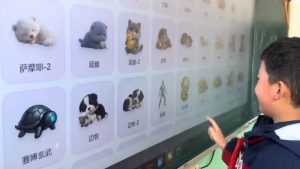
Chinese Schools Reward Students With Digital Pets SAMPLE
Chinese Schools Reward Students With Digital Pets
SAMPLE
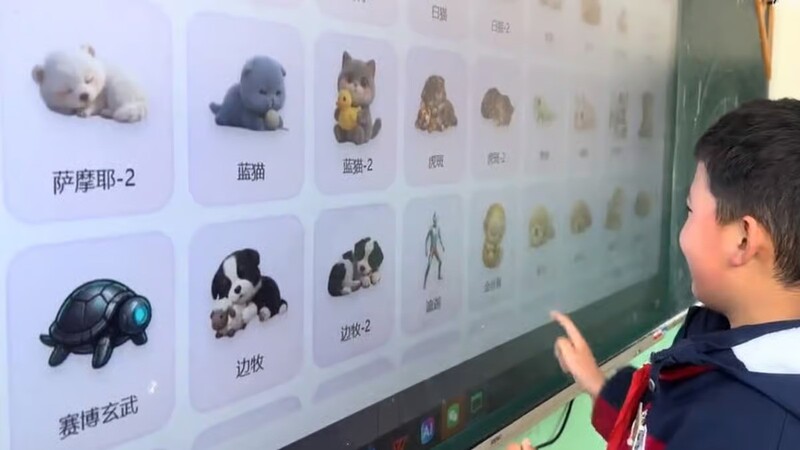
学校用“电子宠物”奖励学生
学校用“电子宠物”奖励学生


AA
AA
AA
AA
Simplified
Traditional


Pinyin
Translation
Pinyin
Keywords
电子 - diànzǐ - electronic
宠物 - chǒngwù - house pet
奖励 - jiǎnglì - to reward / reward (as encouragement)
件 - jiàn - measure word for items, events, things, clothes etc.
好玩 - hǎowán - amusing / fun / interesting
事 - shì - matter / thing / item / work / affair
养 - yǎng - to raise (animals) / to bring up (children) / to keep (pets)
认真 - rènzhēn - conscientious / earnest / serious / to take seriously / to take to heart
帮助 - bāngzhù - to help / to assist / assistance / aid
分 - fēn - to divide / to separate / to distribute / to allocate
长得 - zhǎngde - to look (pretty / the same etc)
拿 - ná - to hold / to seize / to catch / to apprehend / to take / to get
上课 - shàngkè - to go to class / to attend class / to go to teach a class
知道 - zhīdào - to know / to become aware of
孩子 - háizi - child
开心 - kāixīn - to feel happy / to rejoice / to have a great time
Grammar
用 + Verb / Noun Phrase + (来) + Verb Phrase 2 - Expressing a way or a method to do sth with "yòng + Verb / Noun Phrase 1 + lái + Verb Phrase 2" (in this phrase 来 is optional)
学校用“电子宠物”奖励学生
一些 + Noun - Expressing "some / a few…" with "yìxiē + Noun" (yīxiē is pronounced yìxiē due to a tone change rule)
中国的一些学校有一件好玩的事。
Adj. + 的 (+ Noun) - Expressed to link an adjective describing a distinguishing feature to a noun with "Adj. + de (+ Noun)" (noun can be omitted when obvious or has already been mentioned)
中国的一些学校有一件好玩的事。
Subject + 可以 + Verb + Object - Expressing that the subject "can / may" perform an action with "Subject + kěyǐ + Verb + Object" (means "may" or "to be allowed to" and can expresses having another person's permission)
学生可以在电脑里养他们的“电子宠物”,有小猫、小狗、小猪等等。
有了分,学生就可以给电子宠物买吃的。
(在)...里 - Expressing "in / inside…" with "(zài)...lǐ"
学生可以在电脑里养他们的“电子宠物”,有小猫、小狗、小猪等等。
A,B,C...等 / 等等 - Expressing "and so on / etc." with "A,B,C...děng / děng děng"
学生可以在电脑里养他们的“电子宠物”,有小猫、小狗、小猪等等。
如果…(的话), … - Expressing "if..." with "rúguǒ…(de huà), …" (in this structure, 的话 is optional)
如果学生在学校认真学习,听老师的话,或者帮助同学,老师就会给他们“分”。
Possibility 1 + 或(者) + Possibility 2 - Expressing "or…" with "Possibility 1 + huò(zhě) + Possibility 2" (mostly used for declarative sentences)
如果学生在学校认真学习,听老师的话,或者帮助同学,老师就会给他们“分”。
Subject + 会 + Verb / Adverb - Expressing that sth "will" happen or that sb "will" do sth with "Subject + huì + Verb / Adverb"
如果学生在学校认真学习,听老师的话,或者帮助同学,老师就会给他们“分”。
电子宠物吃得多,就会长得大,也会更漂亮。
给 + Recipient + Verb - Expressing a more informal "for sb / sth..." with "gěi + Recipient + Verb"
如果学生在学校认真学习,听老师的话,或者帮助同学,老师就会给他们“分”。
有了分,学生就可以给电子宠物买吃的。
Situation + 就 + Verb / Verb Phrase - Expressing "then / and so / in that case…" with "Situation + jiù + Verb / Verb Phrase" (the action happens "as a consequence of / following on from" the situation)
如果学生在学校认真学习,听老师的话,或者帮助同学,老师就会给他们“分”。
有了分,学生就可以给电子宠物买吃的。
电子宠物吃得多,就会长得大,也会更漂亮。
Verb / Verb Phrase + 了 - Expressing that an action has been completed with "Verb / Verb Phrase + le"
有了分,学生就可以给电子宠物买吃的。
Verb / Adj. + 得 + Degree Complement - Expression links the verb or adjective with a degree complement with "Verb / Adj. + de + Degree Complement"
电子宠物吃得多,就会长得大,也会更漂亮。
更 + Adj. - Expressing "even more…" with "gèng + Adj."
电子宠物吃得多,就会长得大,也会更漂亮。
学生的爸爸妈妈知道后都很高兴,说孩子学习更认真了,在学校也很开心。
为了...,Subject + Action - Expressing "in order to / for the purpose of…" with "wèile...,Subject + Action"
为了多拿一些分,他们每天都认真上课,认真学习。
每 + 天 / 周 / 年 / 次 - Expressing "every day / every week / every year / every time" with "měi + Time Word" (天, 周, 年 and 次 act as their own measure words)
为了多拿一些分,他们每天都认真上课,认真学习。
Subject + 都 + Verb / Verb Phrase - Expressing "all / every" to emphasise the quantity with "Subject + dōu + Verb / Verb Phrase" (都 emphasises the quantity or frequent occurrence)
为了多拿一些分,他们每天都认真上课,认真学习。
Time or Verb Phrase + (以)后 - Expressing "after" a specific time or action with "Time or Verb Phrase + (yǐ)hòu"
学生的爸爸妈妈知道后都很高兴,说孩子学习更认真了,在学校也很开心。
New Situation + 了 - Expressing that there is a change of state or that the action has just happened "now" with "New Situation + le"
学生的爸爸妈妈知道后都很高兴,说孩子学习更认真了,在学校也很开心。
Proper Nouns
Idioms
Ready to complete the lesson's exercises?


Complete Assignment Reading

Loading...
Loading...
Live dictionary

 Stroke
 Write
WriteLive dictionary
StrokeWrite