Learning Chinese by yourself has never felt so easy and possible. All it takes is to open an account on a Chinese self-learning platform, right? But which one?
You start looking for one, and you immediately find a gamified app for vocabulary, a flashcard programme for characters, a podcast for listening, a graded reader for comprehension and a dictionary for everything else.
Within a week, your phone is a graveyard of half-used tools, and your study sessions are wasted deciding what to study instead of studying… and learning.
What really changes the game for independent study is building your routine to one reliable Mandarin self-learning website or app: one digital classroom where you can combine reading, listening, vocabulary, grammar and character practice into one tidy study cycle.
This guide will explain to you the features your Mandarin self-learning platform should have, walk you through several of the leading options, and give you actionable routines that you can start implementing this week.
At a Glance: The Best Chinese Self-Learning Platforms Compared
| Platform | Best For | Levels | Main Learning Focus |
| The Chairman’s Bao (TCB) | Learners who want one platform for the full study cycle, from absolute beginner to advanced. | HSK 1–6+ | Graded news reading, native audio, grammar, flashcards, quizzes. |
| HelloChinese | Absolute beginners; gamified lessons | HSK 1–4 | Game-based lessons; pronunciation; foundational grammar |
| Chinese Zero to Hero | Learners following the official HSK Standard Course textbooks | HSK 1–6 | Video explanations of textbook content; exam preparation |
| ChinesePod | Audio-first learners wanting conversational exposure on the go | HSK 2–6+ | Podcast-style dialogues; listening comprehension |
| Du Chinese | Fiction-lovers who want story series and narrative content | HSK 1–6+ | Graded stories; native audio; dictionary and flashcards |
| TongTong | Learners who want an adaptive, personalised path from day one | HSK 1–6+ | Adaptive vocabulary; level-matched stories with audio; weekly challenges |
What Makes an Effective Mandarin Self-Learning Platform?
So, how should you choose a Chinese self-learning platform? Which features should it have?
A Chinese self-learning platform is an app or website that combines graded content, audio, vocabulary tools and grammar support into one structured study environment, and it must have three key features:
- True level-appropriate input: The learning material must be both challenging enough to encourage growth and approachable enough to minimise frustration. So, a high-quality platform must offer a strict and clear grade to all published content. Advanced students want authentic, idiomatic content, whereas beginners prefer brief, straightforward texts with a limited vocabulary.
- Built-in learning scaffolding: It is distracting to constantly switch between a reader, a different dictionary, and a grammar guide. The perfect platform includes instant definitions, native audio, and on-page structural annotations.
- Active multi-modal practice: Writing helps character memory, listening improves ear training, and reading increases vocabulary. Independent study requires a complete cycle of reading, listening, writing, and active testing to build memory. You should look for a Chinese self-learning platform that offers all that in one place.
The Chairman’s Bao as a Complete Self-Learning Platform
I put this to the test myself, using TCB the way an independent learner would: no teacher, no classroom, just twenty minutes a day at HSK 2 level.
The detail that surprised me most was how rarely I left the app during a study session. Unfamiliar character? Tap, defined.
Unsure how it’s written? Stroke animation, right there. Finished the text? Quiz, flashcards, done.
That, in my experience, is the difference between a resource you visit and a platform you stay with.
I wondered whether that was a fluke, so I ran the test again at HSK 6. Only the content changed. The experience was identical at both levels. TCB, it turns out, genuinely serves learners from absolute beginner (HSK 1) to advanced (HSK 6+), turning one daily-life article into a complete lesson that trains every skill.
Here’s how that works in practice, feature by feature:
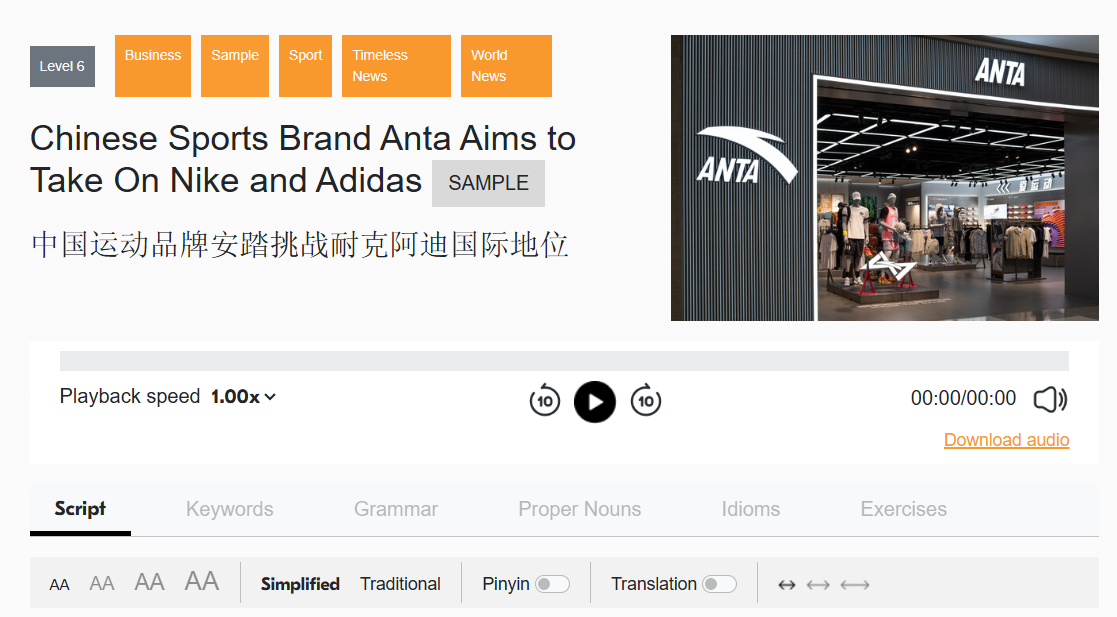
1. Tailored Scaffolding for Absolute Beginners
Beginners do not need to wait until HSK 3 or 4 to engage with real-world topics. TCB publishes short HSK 1-graded lessons using basic words and simplified sentence structures and provides:
- One-tap pop-up dictionary: Tap or click any character to reveal pinyin, clear definitions, and native audio.
- Adjustable display controls: Toggle pinyin on or off, enlarge character fonts, and adjust word spacing to help early readers visually parse sentence components.
- Live stroke-order animations: Master character composition early on with interactive stroke animations and writing practice tools directly in the lesson interface.
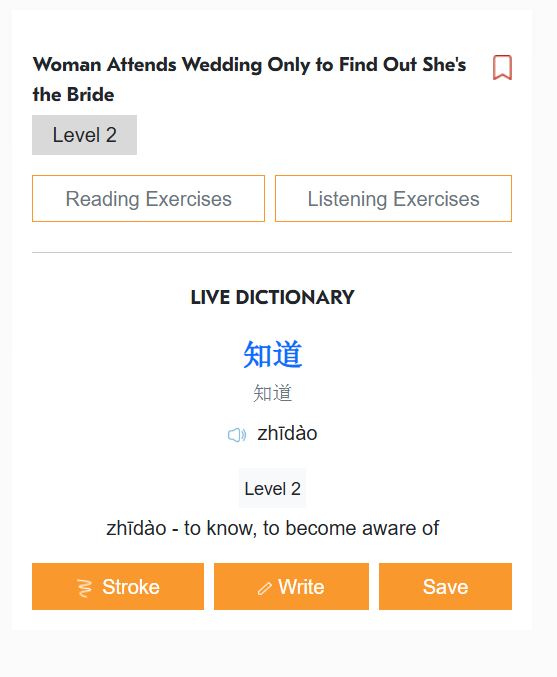
2. Multi-Skill Integration Beyond Reading Within a Single Article
TCB is far more than a reading platform; it provides a fully integrated lesson suite. Every article functions as a complete module containing:
- Human-recorded native audio: Synchronised audio recorded by native speakers at level-appropriate speeds allows for shadowing and listening practice.
- Contextual grammar explanations: Key grammatical patterns in the text are highlighted and broken down with clear explanations and example sentences.
- Interactive comprehension quizzes: Each lesson includes reading, listening, and vocabulary exercises to verify understanding before moving forward.
3. Sustainable Motivation Through Relevant Content
There’s a place for textbook dialogues about buying train tickets, but real-world topics like technology, culture, health and sport give you a real reason to open the app tomorrow. TCB’s news-based approach means you’re not just learning Chinese; you’re reading about the world in Chinese, which is the motivation independent learners need to keep up with their daily study. For more suggestions of what to read at various levels, see TCB’s guide to Chinese reading materials.
Matching Platforms to Your Learning Style, Level, and Goals
If you’re looking for more exercises to challenge yourself in addition to your TCB plan, make sure you choose a Chinese self-learning website or app that matches your specific goals, levels, and learning style and, most importantly, helps you to build a sustainable routine.
- For fictional narrative and casual reading: Du Chinese
If you enjoy light-hearted fictional stories or step-by-step dialogues, narrative readers are what you are looking for. They provide audio-synced text and tap-to-define translations, making them popular choices for casual reading sessions.
- For adaptive vocabulary tracking: TongTong
Adaptive reader apps like TongTong use short stories and spaced repetition systems to measure character retention over time for students whose main focus is vocabulary memory.
- For structure and test preparation: Chinese Zero to Hero
Video-based platforms provide clear, structured approaches for those who prefer classic, step-by-step textbook structure. They are a good option if passing standardised HSK exams is your only goal because they guide you through formal grammatical standards.
- For early gamified practice: HelloChinese
Gamified apps are often beneficial for absolute beginners who prefer short, interactive drills, especially in the first week of self-learning. Through brief, game-like tasks, these resources teach fundamental vocabulary, tone matching, and basic pinyin charts.
Step-by-Step Self-Study Routines by Level
Beginner Level (HSK 1–2)
- Objective: Establish character recognition, correct pronunciation, and basic sentence logic.
- Daily action: Spend 20 minutes on The Chairman’s Bao reading an HSK 1 article.
- Read one TCB HSK 1 article (under 100 words), tapping unfamiliar characters for pinyin.
- Replay the native audio twice, shadowing the second reading aloud.
- Review the day’s new words in the built-in flashcards (5–10 minutes).
- Write five characters by hand, following the stroke animations.
Intermediate Level (HSK 3–4)
- Objective: Move beyond sentence-by-sentence translation to comfortable reading comprehension.
- Daily action: Read 1 or 2 HSK 3–4 articles daily on TCB.
- Turn off pinyin and note unknown words in-app.
- Shadow the audio at full speed, then test yourself with the comprehension quiz.
- Study the embedded grammar explanation and produce three original sentences using the structure.
- Complete your flashcard review queue.
Advanced Level (HSK 5–6+)
- Objective: Build native-level reading speed, master nuanced collocations, and refine listening comprehension.
- Daily action: Read HSK 5 or 6 news lessons without instant translations.
- Read an authentic-level article on a challenging topic.
- Shadow the audio for rhythm, tone pairs and connected speech.
- Summarise the article aloud or in writing in your own words. For specific exam strategies, read TCB’s step-by-step guide on how to prepare for a Chinese test.
- Review flashcards and re-read yesterday’s article for spaced consolidation.
Conclusion: Quality Over Collection
A final word: fluency is a quality and consistency game, not a numbers game. Look for a Chinese self-learning platform that covers the whole learning cycle at your level, make it the centre of your daily routine and let authentic and engaging content do the work.
Ready to build your routine? Choose your level, start your first lesson today and make tomorrow’s ten/twenty minutes non-negotiable.
Frequently Asked Questions (FAQ)
Can a complete beginner learn Chinese through news-based platforms?
Yes, as long as the platform grades its content properly. The Chairman’s Bao begins at HSK 1 with adapted real-world articles supported by pop-up pinyin, instant definitions and
stroke-order animations. The result is comprehensible input at exactly the right level.
How does a complete self-learning platform differ from a graded reader?
A graded reader develops one skill: reading comprehension. A complete self-learning platform such as TCB turns that same text into a full lesson, adding native audio, grammar explanations, flashcards, writing practice and quizzes. In other words, a reader shows you the language, while a platform trains you to use it.
How many minutes a day should I spend on a Chinese self-learning app?
Consistency beats volume. Twenty focused minutes daily on your Mandarin self-learning app will outperform two hours once a week.
Is it possible to reach advanced fluency using only self-learning platforms?
Self-learning platforms can carry you a long way: many learners reach HSK 5 and beyond through structured self-study alone. That said, most learners benefit from occasional live conversation practice as they advance. Consider platforms your engine and real interaction as the open road on which it performs.
Author:

Fabia Parodi
Fascinated by foreign languages and cultures, Fabia Parodi was determined to be a polyglot since she was a child. Fluent in Italian, English, French and Spanish and competent in Mandarin Chinese, Fabia is an experienced language teacher, translator and multicultural marketing specialist.
When in class, she always make sure to include graded and authentic materials in her lessons to expose students to foreign cultures and to introduce a more natural use of the language they are learning. The two things she loves more than languages are travelling and exchanging stories with people from all over the world.