Xiaomi Launches Its Own Ice Cream SAMPLE
Xiaomi Launches Its Own Ice Cream
SAMPLE
小米推出冰淇淋
小米推出冰淇淋


AA
AA
AA
AA
Simplified
Traditional


Pinyin
Translation
Pinyin
Keywords
推出 - tuīchū - to push out / to release / to launch / to publish
冰淇淋 - bīngqílín - ice cream
一共 - yīgòng - altogether
种 - zhǒng - kind / type / measure word for types, kinds, sorts
标准 - biāozhǔn - (an official) standard / norm / criterion
卖 - mài - to sell
元 - yuán - currency unit (esp. Chinese yuan)
来 - lái - to come / to arrive / to come round
买 - mǎi - to buy / to purchase
好吃 - hǎochī - tasty / delicious
高兴 - gāoxìng - happy / glad / willing (to do sth) / in a cheerful mood
看 - kàn - to see / to look at / to read / to watch
喜欢 - xǐhuan - to like / to be fond of
想 - xiǎng - to think / to believe / to suppose / to wish / to want / to miss
Grammar
Verb + 出(来) - Expressed after a verb to indicate completion of an action for "to come up with" or "to come into being" with "Verb + chu(lai)"
小米推出冰淇淋
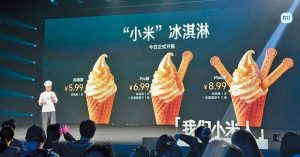
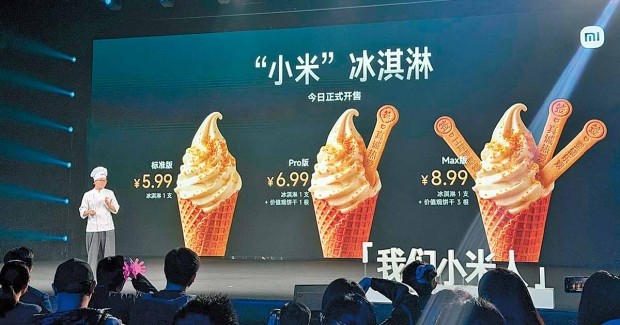
4月10日,小米推出了冰淇淋,一共有三种,标准的一个卖5.99元,pro的一个卖6.99元,Max的一个卖8.99元。
Verb / Verb Phrase + 了 - Expressing that an action has been completed with "Verb / Verb Phrase + le"
4月10日,小米推出了冰淇淋,一共有三种,标准的一个卖5.99元,pro的一个卖6.99元,Max的一个卖8.99元。
这几天,来买冰淇淋的人太多了,三天就卖了2000多个。
很多人买了都说很好吃,他们很高兴。
现在,有不少人看了都很喜欢,都想去买一个。
Subject + 有 + Object - Expressing that the subject "has" an object with "Subject + yǒu + Object"
4月10日,小米推出了冰淇淋,一共有三种,标准的一个卖5.99元,pro的一个卖6.99元,Max的一个卖8.99元。
Measure Word - Expressing the number of sth with an object specific measure word in the form of "Number + Measure Word + Noun" (if the number is one, you can omit it and use the measure word by itself)
4月10日,小米推出了冰淇淋,一共有三种,标准的一个卖5.99元,pro的一个卖6.99元,Max的一个卖8.99元。
这几天,来买冰淇淋的人太多了,三天就卖了2000多个。
现在,有不少人看了都很喜欢,都想去买一个。
Adj. + 的 (+ Noun) - Expressed to link an adjective describing a distinguishing feature to a noun with "Adj. + de (+ Noun)" (noun can be omitted when obvious or has already been mentioned)
4月10日,小米推出了冰淇淋,一共有三种,标准的一个卖5.99元,pro的一个卖6.99元,Max的一个卖8.99元。
几 + 天 / 年 - Expressing "several / a few days or years" with "jǐ + tiān / nián" (天 and 年 act as their own measure words)
这几天,来买冰淇淋的人太多了,三天就卖了2000多个。
Verb / Adverb / Phrase + 的 + Noun - Expressed to link a noun to a preceding verb or phrase with "Verb / Adverb / Phrase + de + Noun"
这几天,来买冰淇淋的人太多了,三天就卖了2000多个。
太 + Adj. (+ 了) - Expressing "too" to indicate excess with "tài + Adj. (+ le)"
这几天,来买冰淇淋的人太多了,三天就卖了2000多个。
Subject + Time Phrase + 就 + Verb / Verb Phrase - Expressing that the action has "happened earlier" or "already previously happened" with "Subject + Time Phrase + jiù + Verb / Verb Phrase"
这几天,来买冰淇淋的人太多了,三天就卖了2000多个。
Number + 多 - Expressing a number in excess with "Number + duō"
这几天,来买冰淇淋的人太多了,三天就卖了2000多个。
Subject + 都 + Verb / Verb Phrase - Expressing "all / every" to emphasise the quantity with "Subject + dōu + Verb / Verb Phrase" (都 emphasises the quantity or frequent occurrence)
很多人买了都说很好吃,他们很高兴。
现在,有不少人看了都很喜欢,都想去买一个。
Subject + Adverb + 好 + Sense Verb - Expressing that something offers a "good sensory experience" with "Subject + Adverb + hǎo + Sense Verb"
很多人买了都说很好吃,他们很高兴。
Noun / Pronoun + 很 + Adj. - Expressing "very" or to link a noun or pronoun and an adjective with "Noun / Pronoun + hěn + Adj." (sometimes the 很 is translated as "very" but often it is a link between a noun and an adjective)
很多人买了都说很好吃,他们很高兴。
Noun + 很 + Verbs of Feeling - Expressing "very…" with "Noun + hěn + Verbs of Feeling" (used to increase intensity to verbs of feeling)
现在,有不少人看了都很喜欢,都想去买一个。
Subject + 想 + Verb (+ Object) - Expressing "would like to" with "Subject + xiǎng + Verb (+ Object)" (negative formed with 不想)
现在,有不少人看了都很喜欢,都想去买一个。
Proper Nouns
小米 - Xiǎomǐ - Xiaomi (Chinese electronics company)Idioms
Ready to complete the lesson's exercises?


Complete Assignment Reading

Loading...
Loading...
Live dictionary

 Stroke
 Write
WriteLive dictionary
StrokeWrite